
How Central Bank Decisions Affect Forex Markets: The Ultimate Driver
Master forex trading by understanding how central bank decisions, interest rate hikes, and quantitative easing dictate global currency strength.
Quick Answer
The Primary Tool: Interest Rates
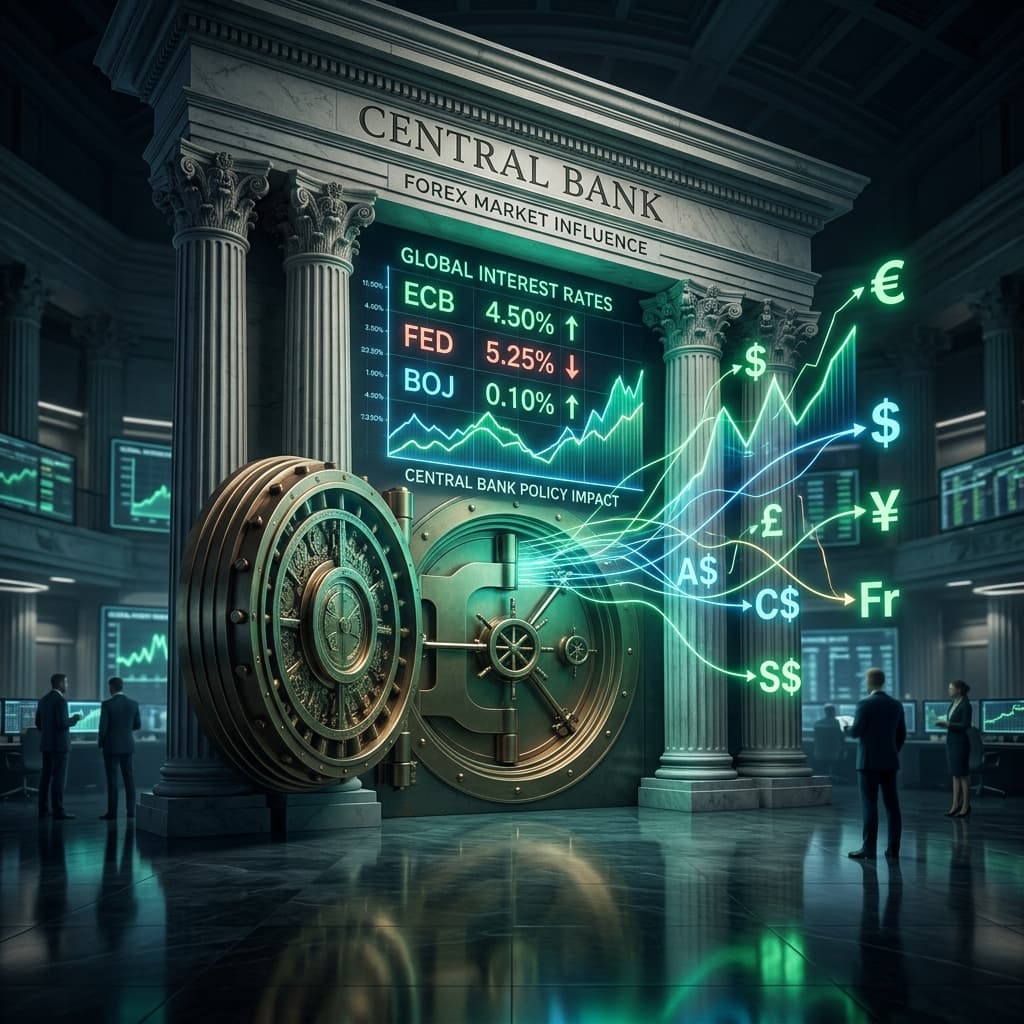
The core mandate of most central banks is to maintain price stability (control inflation) and maximize employment. Their primary weapon to achieve this is the manipulation of the baseline interest rate. Interest rates dictate the flow of global capital: * Higher Interest Rates (Hawkish): When a central bank raises rates, it offers a higher return on investments denominated in that currency (like
Technical analysis can tell you when a market might turn, but fundamental analysis tells you why. In the world of foreign exchange, there is no fundamental driver more powerful than the decisions made by Central Banks.
Whether it's the Federal Reserve (Fed), the European Central Bank (ECB), or the Bank of Japan (BOJ), central banks hold the keys to a currency's intrinsic value.
The Primary Tool: Interest Rates
The core mandate of most central banks is to maintain price stability (control inflation) and maximize employment. Their primary weapon to achieve this is the manipulation of the baseline interest rate.
Interest rates dictate the flow of global capital:
- Higher Interest Rates (Hawkish): When a central bank raises rates, it offers a higher return on investments denominated in that currency (like government bonds). This attracts massive influxes of foreign capital, driving up demand and strengthening the currency.
- Lower Interest Rates (Dovish): When a central bank lowers rates, the return on investment drops. Capital flows out of that economy in search of higher yields elsewhere, resulting in a weakening of the currency.
The Vocabulary of Central Banks: Hawkish vs. Dovish
Institutional traders spend millions analyzing the specific words used by central bank governors during their press conferences. The tone of the central bank dictates the market's expectation of future interest rates.
- "Hawkish" Tone: The central bank is concerned about inflation and hints that interest rates will need to be raised or kept high. This is incredibly Bullish for the currency.
- "Dovish" Tone: The central bank is concerned about economic growth and hints that interest rates might be cut or stimulus might be added. This is heavily Bearish for the currency.
Quantitative Easing and Tightening
When interest rates hit zero, central banks resort to unconventional monetary policy.
- Quantitative Easing (QE): The central bank prints money to buy government bonds, flooding the market with liquidity. This massively increases the supply of the currency, inevitably leading to long-term devaluation.
- Quantitative Tightening (QT): The central bank stops buying bonds and shrinks its balance sheet, removing liquidity from the market. This reduces currency supply and typically leads to appreciation.
How to Trade Central Bank Events
Trading during a central bank rate decision (like the FOMC) is notoriously volatile. To navigate these waters:
- Never Guess the Rate: The actual rate hike/cut is usually "priced in" by the market weeks in advance. The real volatility comes from the press conference where the governor discusses future plans.
- Watch the Yield Spreads: Currency pairs move based on the difference in interest rates between the two countries. If the Fed is hiking but the ECB is hiking faster, the EUR/USD will likely rise.
- Utilize Momentum: Let the algorithms fight it out during the first 15 minutes of the announcement. Once a clear trend is established, use a Currency Strength Meter to confirm that institutional volume is backing the move before entering.
Frequently Asked Questions
Why does a currency sometimes drop even if the central bank raises rates? This happens when the rate hike was smaller than the market expected. For example, if the market priced in a 0.50% hike, but the bank only hiked by 0.25%, the market perceives this as "Dovish" and sells the currency.
Which central bank is the most important? The US Federal Reserve (The Fed). Because the US Dollar is the world's reserve currency, the Fed's decisions impact global liquidity, emerging markets, and commodities like Gold and Oil.
How often do central banks meet? Most major central banks hold monetary policy meetings every 6 weeks (roughly 8 times a year).
Track the institutional reaction to central bank policy. Monitor absolute currency strength in real-time with our Live Market Dashboard.
Apply This Knowledge
See It Live on the Currency Strength Meter
Put this analysis into practice. Track real-time momentum across all 8 major currencies — free, no account needed.
Currency Strength Hub Team
CurrencyStrengthHub Editorial & Research Team
The CurrencyStrengthHub Editorial & Research Team comprises seasoned market analysts, quantitative developers, and active traders. We specialize in absolute currency strength models, global macroeconomic analysis, and creating data-driven tools for retail forex traders.